
Welcome to the launch of SCMA’s 2025 Legislative Newsletter. We’re here to give you the latest and greatest of all things happening in Palmetto State politics, particularly the happenings of the first session of the 126th South Carolina General Assembly.
For those of you familiar with this newsletter, welcome back! For those of you joining us for the first time, welcome aboard. We hope that you’ll find this newsletter helpful and informative. Your comments and feedback improve this newsletter, so if you have any questions, thoughts, or critiques, please drop us a line!
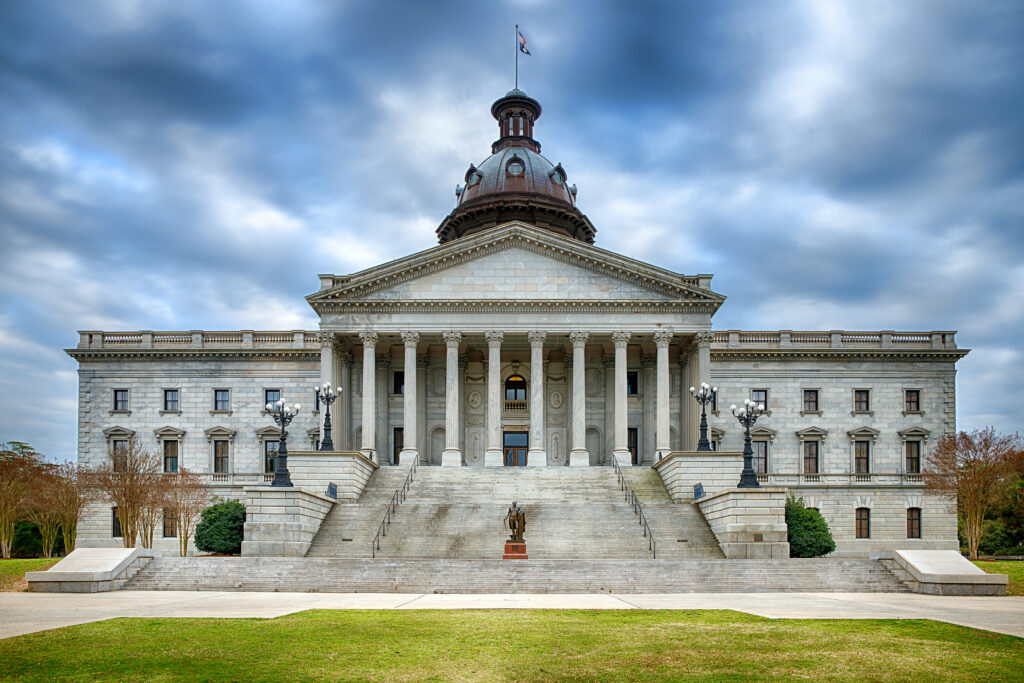
Lay of the Land
The SC General Assembly will kick off the start of their two-year legislative session on Tuesday, January 14th. The session is expected to last from January to May.
January will be a historic month for Governor Henry McMaster as he becomes the longest-serving governor in South Carolina’s history. (Background: This is due to a combination of McMaster filling the remainder of Governor Nikki Haley’s term, being re-elected twice, and the SC constitution being amended in 1980 to allow a governor to serve two consecutive terms).
The 2024 election resulted in significant changes to the composition of the General Assembly. A combination of successful primary challenges, retirements, and general election upsets resulted in 13 new Senators joining the chamber. This represents a 28% turnover rate, the largest in recorded history for the Senate. As a result of the elections, Republicans will control a supermajority (34-12) in the Senate for the first time.
The House saw fewer changes, with the primary defeats of House Labor, Commerce, and Industry (LCI) Chairman Bill Sandifer and Assistant Majority Leader Jay West being the major exceptions. As a result, Rep. Bill Herbkersman (R-Beaufort) has now taken over the Chairmanship of LCI, while Rep. Gil Gatch (R-Dorchester) will now lead energy issues within the LCI committee. House Republicans currently hold an 88-35 supermajority.
Finally, it’s always helpful to consider the upcoming election cycle for a full view of the political landscape. During the 2026 elections, all statewide constitutional officers will be on the ballot, with Governor McMaster being term-limited and Agriculture Commissioner Hugh Weathers announcing that he will not seek re-election. Senator Graham will be on the ballot in 2026, along with the US Congressional delegation and the SC House of Representatives. Filing for office will begin in April 2026, with primaries in June. The last time there was an open seat for Governor was in 2010. During that election cycle, the first gubernatorial candidate launched their campaign in March, the year before the primary. All this is to say, there is a high likelihood that we will start to see 2026 gubernatorial politics creep into state dynamics during this legislative session.
Inside Baseball on Senate Rules Changes
The House and Senate met briefly in December for organizational sessions, giving us a glimpse of some procedural changes for the upcoming session. During the reorganization session, the Senate eliminated the annual “crossover” deadline, the date legislation had to reach the House to be considered. The House has the same rule and signaled an openness to altering this requirement. The crossover deadline has been a helpful tool in ensuring that legislation with unintended consequences is not rushed and passed at the very end of the session. Another Senate rule change worth monitoring concerns recusals. Due to the citizen-legislator model, there are many instances throughout a session where a lawmaker may have to recuse themselves from a vote due to a personal financial conflict arising from their occupation. In the past, legislators with conflicts might participate on the committee level and during floor debates but recuse themselves for a final vote. Under the new change, senators would have to recuse themselves at the beginning of the process instead of the end. The Senate adopted a rule change to allow either the President of the Senate or the Majority Leader to call for a vote to remove a chairman from their position.
Policy Drivers
The General Assembly is expected to discuss several policy items this session, but two of the largest themes will likely be taxes and energy.
 Taxes: For several years, the SC General Assembly has been working to decrease the personal income tax. Last year, the SC General Assembly lowered the top individual rate from 6.4% to 6.2%, with a fiscal impact of $100 million. The General Assembly has expressed interest in accelerating the reduction to the 3% range this coming session. As a sign that the governor’s office may be aligned with this strategy, some state agencies have submitted leaner budget requests to free up state revenue, which could be used for tax reform. In addition to reducing personal income tax, the General Assembly will also need to act on raising or eliminating the cap related to the manufacturing property tax exemption and decide whether to enact exemptions for small business personal property taxes.
 Energy: Will this be the year we finally see significant energy legislation adopted by the General Assembly? After years of attempts to address energy policy, the stars seem to be aligning for action on this topic in 2025. The House passed its version of an energy bill last year after over a year of testimony and feedback from an ad hoc committee established to study the topic. The Senate Judiciary Committee considered and passed an amended but broadly similar version of the legislation late in the session; however, the bill’s progress quickly ended after Senators raised objections that the process was being rushed. After the session concluded, the Senate announced the formation of a select committee to study the energy issue. The select committee met throughout the Fall and produced a working draft that paired back the House version of the bill while maintaining several key provisions related to permitting and an expedited appeals process for energy projects. Moving to the upcoming session, the House has pre-filed its version of the energy legislation, and the Senate has indicated that energy will be an early priority for this session. One outstanding procedural question is whether the select committee will continue meeting to advance the legislation or whether the Senate Judiciary Committee will retain primary jurisdiction.
Six Strategic Priorities
As the 126th South Carolina General Assembly begins its work, we’re committed to championing pro-manufacturing policies. Here’s a closer look at the SCMA’s strategic priorities for this session:
 Legal Reform
SCMA supports a civil justice system that fosters a competitive landscape for manufacturers to operate, innovate, grow, and create jobs. That includes reforming South Carolina’s joint and several liability law to ensure fairness and reduce unnecessary legal burdens.
Tax Reform
The General Assembly has expressed interest in an expansive tax reform package. As these discussions occur, SCMA will prioritize safeguarding sales tax exemptions for manufacturers, preventing manufacturing property tax increases, reducing individual income tax rates, and maintaining a competitive tax environment where manufacturers can continue to thrive and grow.
Energy Reform
Energy is a critical input of manufacturing, driving the machinery, processes, and operations that transform raw materials into finished products. SCMA will advocate for energy policies that ensure manufacturers have access to affordable, dependable, and reliable energy.
 Workforce Development
Advancing education and workforce development initiatives is critical to the success of South Carolina’s manufacturing industry. Our legislative priorities include revising the retrainSC program (formerly Ezone) to enhance training opportunities, modernizing the Education and Economic Development Act (EEDA) to better align education with industry, and increasing public awareness of career opportunities in manufacturing.
 Environment
SCMA supports environmental policies based on sound science that strikes a balance between protecting the environment and facilitating economic growth. SCMA will work to ensure environmental regulations are fair so that companies are able to locate, secure permits, build, and operate their facilities in a timely and efficient manner.

Investing in Infrastructure
Strong and reliable infrastructure—from roads and rails to bridges and ports— is essential for manufacturers to move materials and products efficiently and safely. SCMA advocates for strategic and forward-thinking policies that support South Carolina’s existing and future infrastructure needs.
Notable Pre-Files
The following bills were pre-filed in the House and Senate during the November and December pre-filing period. While they represent just a fraction of the pre-filed bills, they are of interest given their potential impact on the manufacturing sector.
S. 12 – Senator Rankin: A BILL TO AMEND THE SOUTH CAROLINA CODE OF LAWS BY ADDING SECTION 58-31-205 SO AS TO AUTHORIZE THE PUBLIC SERVICE AUTHORITY TO JOINTLY OWN, AS TENANTS-IN-COMMON OR THROUGH A LIMITED LIABILITY COMPANY, WITH INVESTOR-OWNED UTILITIES, ELECTRICAL GENERATION AND TRANSMISSION FACILITIES.
S. 47 – Senators Davis and Sutton: A BILL TO AMEND THE SOUTH CAROLINA CODE OF LAWS BY AMENDING SECTION 12-6-3440, RELATING TO THE TAX CREDIT FOR EMPLOYEE CHILDCARE PROGRAMS, SO AS TO INCREASE THE MAXIMUM CREDIT AND TO ALLOW THE CREDIT TO BE APPLIED AGAINST OTHER TAXES; AND BY ADDING SECTION 12-6-3595 SO AS TO ALLOW A TAX CREDIT FOR INDIVIDUAL TAXPAYERS THAT ARE EMPLOYED FULL-TIME AS A CHILDCARE DIRECTOR OR CHILDCARE STAFF PERSON.
S. 53 – Senator Davis: A BILL TO AMEND THE SOUTH CAROLINA CODE OF LAWS BY ENACTING THE “SOUTH CAROLINA COMPASSIONATE CARE ACT” BY ADDING ARTICLE 20 TO CHAPTER 53, TITLE 44 SO AS TO PROVIDE FOR THE SALE OF CANNABIS PRODUCTS FOR THERAPEUTIC USE AND THE CONDITIONS UNDER WHICH A SALE CAN OCCUR; BY ADDING SECTION 56-5-3910 SO AS TO PROVIDE THAT IT IS UNLAWFUL FOR A DRIVER OF A MOTOR VEHICLE TO VAPORIZE CANNABIS PRODUCTS AS DEFINED IN SECTION 44-53-2010 WHILE OPERATING THE MOTOR VEHICLE AND TO PROVIDE PENALTIES; BY AMENDING SECTIONS 44-53-1810, 44-53-1820, AND 44-53-1830, ALL RELATING TO “JULIAN’S LAW,” SO AS TO MAKE CONFORMING CHANGES; BY REPEALING ARTICLE 4 OF CHAPTER 53, TITLE 44 RELATING TO CONTROLLED SUBSTANCES THERAPEUTIC RESEARCH; AND FOR OTHER PURPOSES.
S. 106 – Senator Rice: A BILL TO AMEND THE SOUTH CAROLINA CODE OF LAWS BY AMENDING SECTION 27-13-30, RELATING TO THE LIMITATION ON OWNERSHIP OR CONTROL OF LAND IN THIS STATE BY ALIENS OR CORPORATIONS OWNED BY ALIENS, SO AS TO REDUCE THE LIMITATION TO ONE THOUSAND ACRES.
S. 151 – Senator Kennedy: A BILL TO AMEND THE SOUTH CAROLINA CODE OF LAWS BY ADDING SECTION 12-37-221 SO AS TO PROVIDE THAT THE FIRST THIRTY THOUSAND DOLLARS OF THE FAIR MARKET VALUE OF A SMALL BUSINESS IS EXEMPT FROM COUNTY, MUNICIPAL, SCHOOL, AND SPECIAL ASSESSMENT REAL ESTATE PROPERTY TAXES.
H. 3116 – Rep. Bustos: A BILL TO AMEND THE SOUTH CAROLINA CODE OF LAWS BY ADDING SECTION 48-6-90 SO AS TO REQUIRE THE DEPARTMENT OF ENVIRONMENTAL SERVICES TO PROMULGATE REGULATIONS PROHIBITING THE DISCHARGE OF CERTAIN CHEMICALS INTO THE STATE’S WATERWAYS AND DRINKING WATER SUPPLIES.
H. 3218 – Rep. Beach: A BILL TO AMEND THE SOUTH CAROLINA CODE OF LAWS BY ADDING SECTION 41-8-125 SO AS TO PROVIDE CERTAIN LAW ENFORCEMENT ENTITIES AND THE DEPARTMENT OF EMPLOYMENT AND WORKFORCE ARE ENTITLED TO RECEIVE COPIES OF E-VERIFY DOCUMENTATION MAINTAINED BY EMPLOYERS, TO PROVIDE EMPLOYERS SHALL PROVIDE SUCH COPIES UPON REQUEST, AND TO PROVIDE SUCH REQUESTING PARTIES SHALL RELY ON THE FEDERAL GOVERNMENT TO VERIFY THE EMPLOYMENT ELIGIBILITY OF AN EMPLOYEE AND MAY NOT INDEPENDENTLY MAKE A FINAL DETERMINATION REGARDING SUCH A VERIFICATION.
H. 3298 – Rep. Beach: A BILL TO AMEND THE SOUTH CAROLINA CODE OF LAWS BY ADDING SECTION 12-6-1230 SO AS TO PROVIDE THAT OVERTIME INCOME IS EXEMPT FROM CERTAIN TAXES.
H. 3309 – Reps. G. M. Smith, Gatch, Herbkersman and Pope: A BILL TO AMEND THE SOUTH CAROLINA CODE OF LAWS BY ENACTING THE “SOUTH CAROLINA ENERGY SECURITY ACT.”
H. 3343 – Reps. Gilliam and Pope: A BILL TO AMEND THE SOUTH CAROLINA CODE OF LAWS BY ADDING SECTION 27-1-80 SO AS TO PROVIDE THAT CERTAIN COMPANIES OWNED, IN WHOLE OR IN PART, BY THE PEOPLE’S REPUBLIC OF CHINA OR THE CHINESE COMMUNIST PARTY MAY NOT OWN, LEASE, POSSESS, OR EXERCISE ANY CONTROL OVER ANY LAND OR REAL ESTATE LOCATED WITHIN FIFTY MILES OF A STATE OR FEDERAL MILITARY BASE OR INSTALLATION FOR THE PURPOSE OF INSTALLING OR ERECTING CERTAIN TOWERS.
H. 3344 – Reps. Gilliam and Pope: A BILL TO AMEND THE SOUTH CAROLINA CODE OF LAWS BY ADDING SECTION 11-1-130 SO AS TO PROHIBIT CERTAIN CONTRACTS WITH CERTAIN FOREIGN-OWNED COMPANIES IN CONNECTION WITH CRITICAL INFRASTRUCTURE.
H. 3366 – Rep. Long: A BILL TO AMEND THE SOUTH CAROLINA CODE OF LAWS BY ADDING SECTION 13-1-55 SO AS TO PROHIBIT THE DEPARTMENT OF COMMERCE FROM OFFERING OR AWARDING INCENTIVES TO CERTAIN COMPANIES OWNED OR CONTROLLED BY THE PEOPLE’S REPUBLIC OF CHINA OR THE CHINESE COMMUNIST PARTY, AND TO PROHIBIT ANY COMPANY RECEIVING AN INCENTIVE FROM CONTRACTING WITH SUCH PROHIBITED COMPANIES.
Thank you!
Thank you for allowing us to be the voice for manufacturing in South Carolina. If you have any questions about specific legislation or the upcoming session, please do not hesitate to contact SCMA’s Vice President of Government Relations, Allen Klump.
